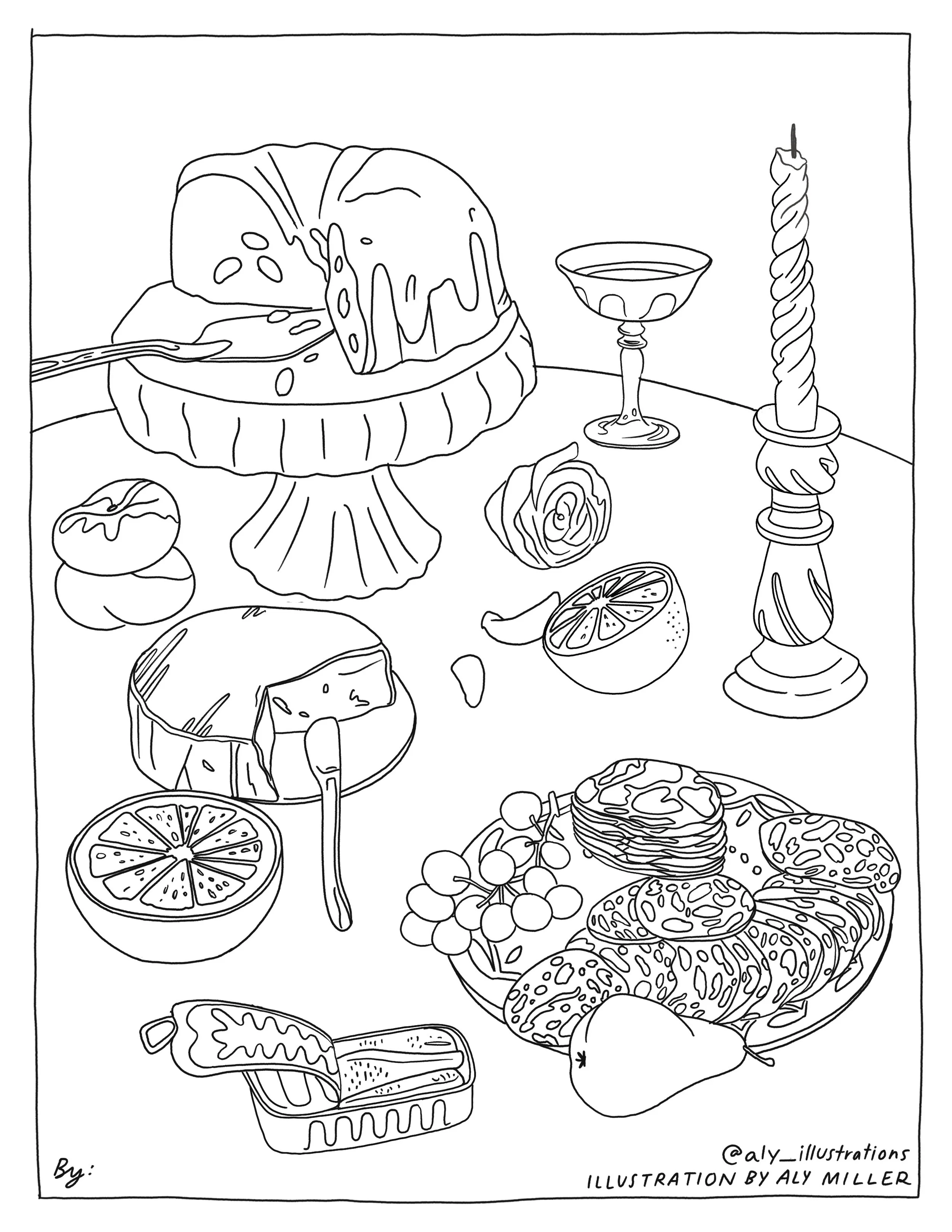
Mutual Aid Coloring Sheet
Mutual Aid Coloring Sheet
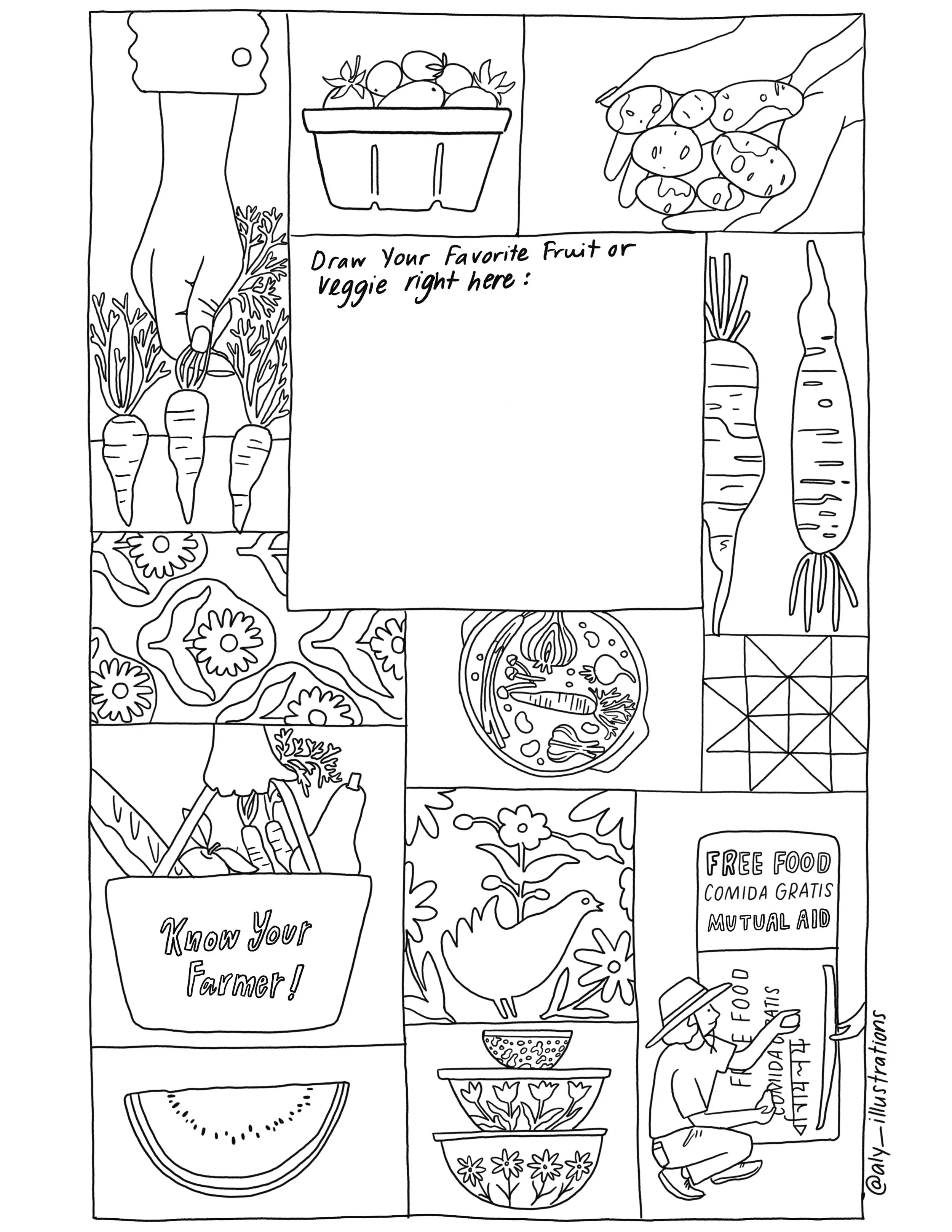
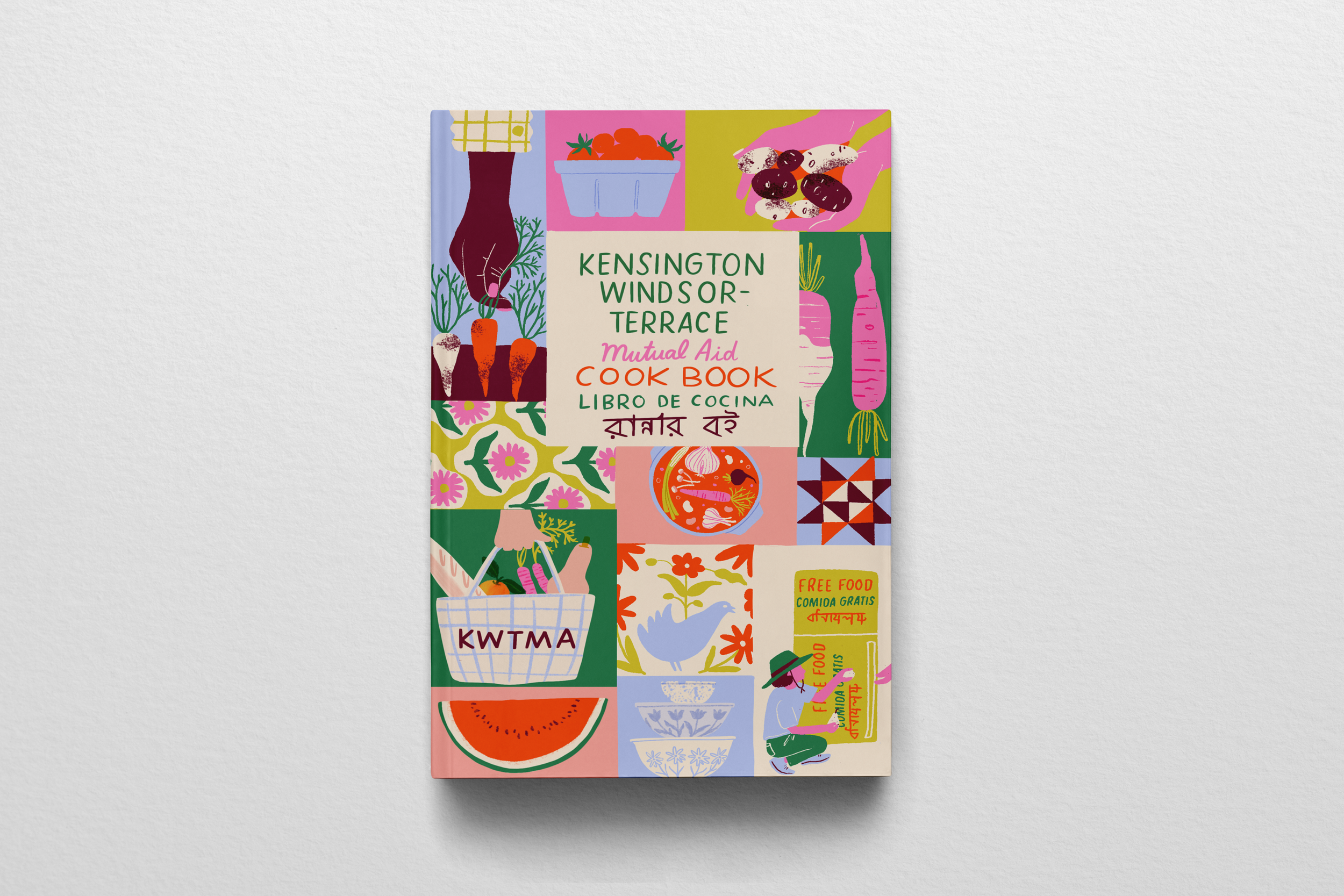
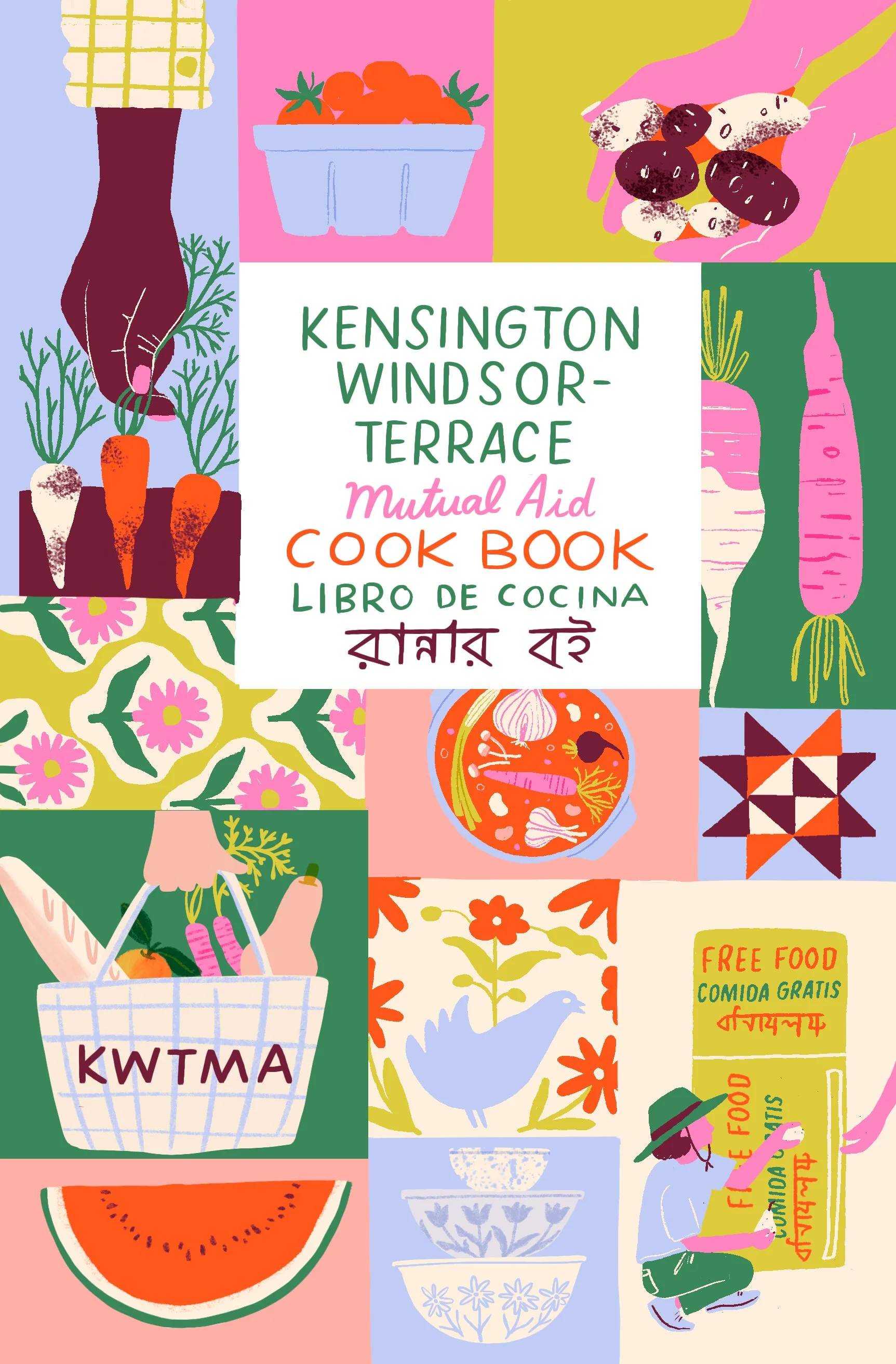
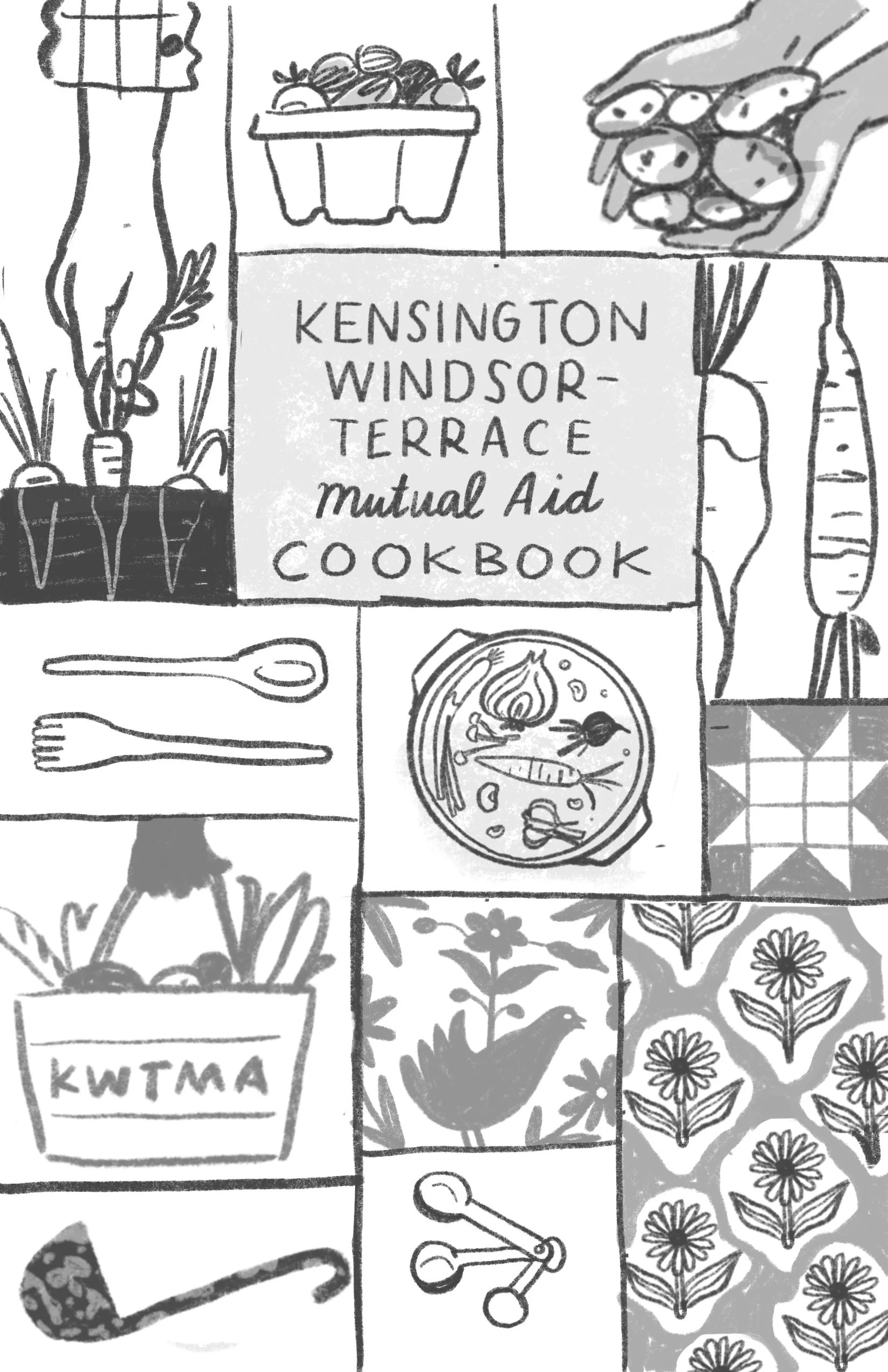
This is a coloring sheet inspired by the cover that I designed for a community cookbook for the Kensington Windstor-Terrace Mutual Aid group in Brooklyn, New York. This cookbook is written in three languages that reflect the people who live there: English, Spanish and Bangla (also known as Bengali).
For this piece, I illustrated different points in our food system, from farm to grocery drop-off to mutual aid Free Food Fridges, to the kithen table. I also added in some illustrated patterns inspired by textiles from New England quilts, Otomi embroidery from Central Mexico, and wood block prints from Bangladesh. Can you spot them? Here is a link to a video I made with the story behind my design, and a few places where I found inspiration.
To create the coloring sheet, I re-drew the shapes with a black line to create a coloring sheet for people of all ages to fill in and enjoy. The middle features a space for you to draw your favorite veggie!
More about Kensington Windsor-Terrace Mutual Aid:
Located just south and southwest of Prospect Park, Kensington and Windsor Terrace are Brooklyn neighborhoods rich in cultural, linguistic, and socioeconomic diversity. When the COVID-19 pandemic arrived in March 2020, neighbors mobilized to create a multifaceted mutual aid network. Six years later, the community continues to sustain a free fridge and a biweekly Neighborhood Cooperative Food Project, as food insecurity remains a pressing issue for many of our neighbors.
KWTMA purchases food in bulk from a local farm cooperative (Lancaster Farm Fresh) and distributes it throughout the neighborhood. Some neighbors receive “solidarity” orders, funded through a markup on paying neighbors’ orders and community fundraising. Everyone uses the same order form and picks up their food at the same location, and neighbors move freely between solidarity and paying orders as their circumstances change.
The project brings together three major linguistic communities: Spanish, Bangla, and English speakers. On any given distribution day, 40 to 50 neighbors come together to sort deliveries, coordinate distribution, and collect food from one another’s yards. What began as an emergency response to the pandemic has grown into an enduring practice of neighbors caring for one another.